For those of us with the car bug, we know what it feels like to see a car that we just have to own. This has happened twice now in my car-collecting career. The first time was seven years ago when a seemingly harmless Facebook post of a 1962 Morris Mini-Minor for sale caught my eye. That ad changed my life as a car person. The little Mini was located in New Brunswick, Canada. How was I supposed to get it here? I had barely gotten my feet wet being a car owner, and I was contemplating the importation of one from another country
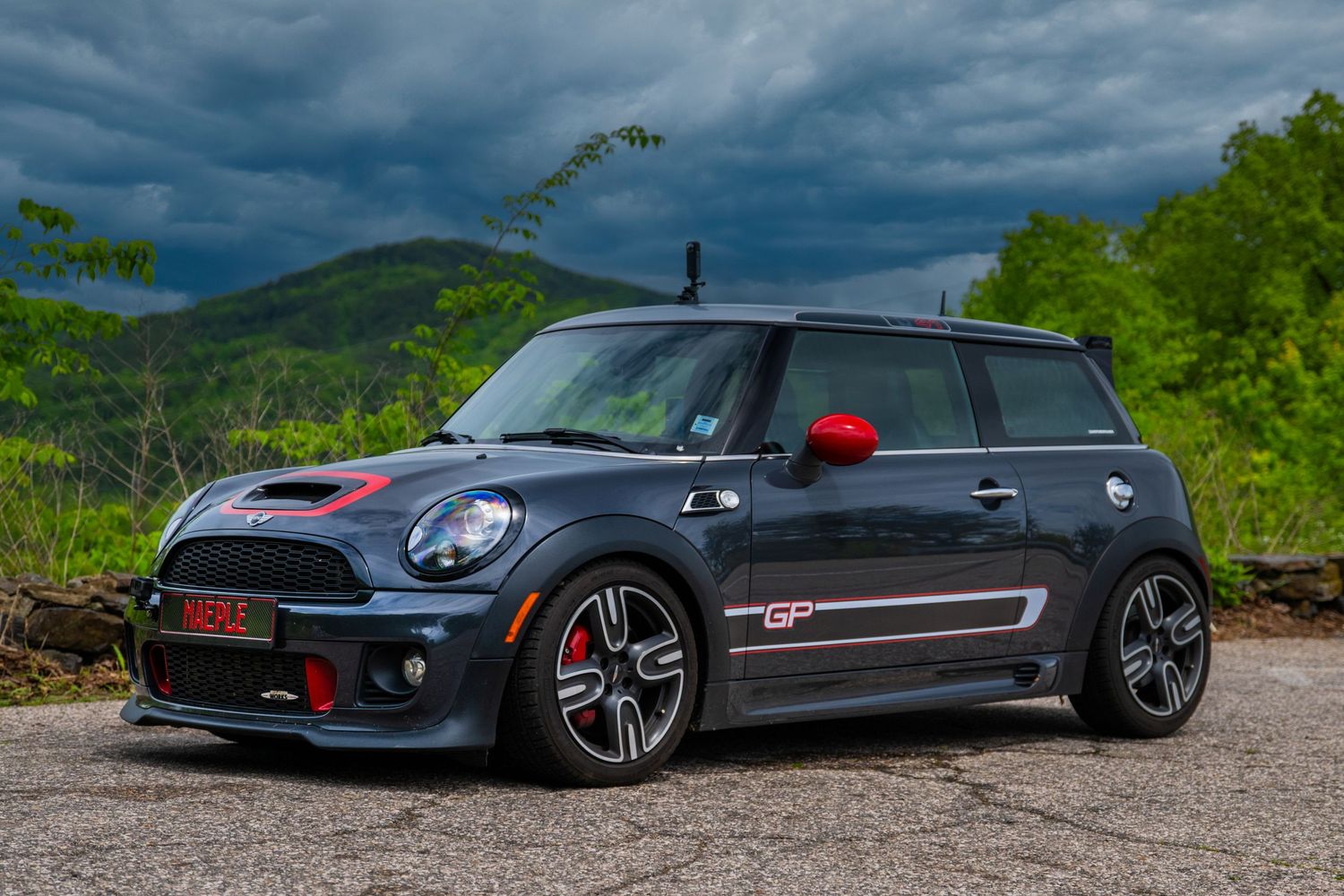
Fast forward to today, I have now imported two vehicles from Canada. The most recent is a 2013 MINI Cooper John Cooper Works GP. Only 2,000 of these top-of-the-line MINIs were produced worldwide and only 50 were sold in Canada. I had been searching for one for about a year. This model does not come up for sale very often. Once again, a Facebook ad found one located in Brookfield, Nova Scotia at a dealership called RuralWorx Auto. I communicated back and forth with Lucas, the salesman. Skeptical about buying a car unseen (yet again), Lucas eased all of my doubts. He was very responsive and sent me numerous photos and videos. He was patient while I planned out how I would get the car back to the States. The Brookfield area is lucky to have such an honest salesman in their midst.
My journey home took 10 hours and 600 miles. I got acquainted with my ‘new’ car quickly. Having owned a MINI for 10 years already, this was just a matter of getting used to the increase in power. I called several brokers for some assistance in the importation process, but no one returned my calls. Finally, I decided to call the port that I would be traveling back through for some insight. They were incredibly helpful and instructed me on exactly what was needed.
There are key differences in importing and registering a foreign vehicle depending on the age and if you are driving or towing it back. Any vehicle 25 years or older does not have to comply with EPA and DOT standards when importing into the United States. Therefore, the paperwork that needs to be done with United States Customs is significantly less. When I imported my 1962 Classic Mini, I trailered it home. If you tow a vehicle instead of driving it you do not need temporary plates, registration, or insurance.
For a vehicle older than 25 years, U.S. Customs will require the following: a valid U.S. passport, a valid Driver's License, and a Bill of Sale or Purchase Agreement. If the vehicle is not being towed, they will also need valid temporary plates and temporary registration. In the case of a private sale, you will need the previous owner's registration and title as proof they were allowed to sell it to you. It will also act as your temporary registration. If the vehicle is being purchased from a dealership, they should provide you with temporary plates and temporary registration. In my case, they supplied me with both. If not, depending on the state that you live in, your DMV may be able to provide you with a temporary plate and registration.
A newer vehicle requires two additional forms at the time of import, EPA 3520-1 and DOT HS-7. EPA 3520-1 is for the Importation of Motor Vehicles and “Motor Vehicle Engines Subject to Federal Air Pollution Regulations.” This means that the vehicle you are importing must comply with all United States EPA regulations. DOT HS-7 is similar, but relates to the “Federal Motor Vehicle Safety, Bumper and Theft Prevention Standard.” This indicates that the vehicle may comply with all current US safety standards.
There are a few ways in which you can determine if your vehicle complies. You have the option to contact the manufacturer and ask if they can forward a “Letter of Compliance.” This letter will state whether the vehicle complies with US EPA and DOT Standards. If the manufacturer is not able to provide this letter, the border will detain the vehicle and do its own inspection. This process can take several months, and you are responsible for all fees associated with storage and inspection. If neither of these options is viable, you may want to consider hiring a broker that specializes in vehicle importation. Fees can range from a few hundred dollars to several thousand. In these cases, they would arrange all paperwork, handle EPA and DOT compliance, and schedule a time for border crossing. Some brokers can even handle transport, for an extra fee of course. But if you are like me, determined and a little stubborn, you can do the process yourself.
Upon arrival at the point of entry, in my case Calais, Maine (both times), the Border Agent will ask you the purpose of your trip as you are leaving and entering back into the country. You will be asked to present your passport, and also may be asked to present something with the VIN of the vehicle on it. I presented the Bill of Sale. The agent will then request that you pull over and park, and will hand your documents off to another agent. You should expect to spend about an hour, so long as you have all your documents in order. The Border Agent will fill out forms EPA 3520-1 and DOT HS-7, as well as an Entry Summary Form. This form contains your information and the basic information about the vehicle. At this time, they will also calculate your Import Tax which is 2.5% of the overall price of the vehicle. This also includes any taxes and fees. After the conversion from Canadian to US dollars, the tax was only a few hundred dollars—A small price for a unique import.
Once all the paperwork is completed and you pay the import tax, they send you on your way with a copy of all documents. Your next step is registering it with the Town Hall or DMV. The State of New Hampshire requires the following for registration of vehicles older than 25 years; all copies of the paperwork you filed with customs, your purchase and sales agreement, title and registration, or a VIN verification. Because titles are not required for vehicles over the age of 25, the title is not necessary, but it is always best to check before taking on all this work.
There are no exceptions to these steps, as they are required to be titled. I attempted to register with a VIN verification in place of the Title and registration as I had done seven years ago, but the rules had changed. Once you have tackled the border crossing (and the more daunting task of registration) you are free to enjoy your newly imported vehicle.
People may ask what possessed you to travel such lengths just for a vehicle, but as I stated at the beginning, if you don't have that car bug, you just wouldn’t understand.